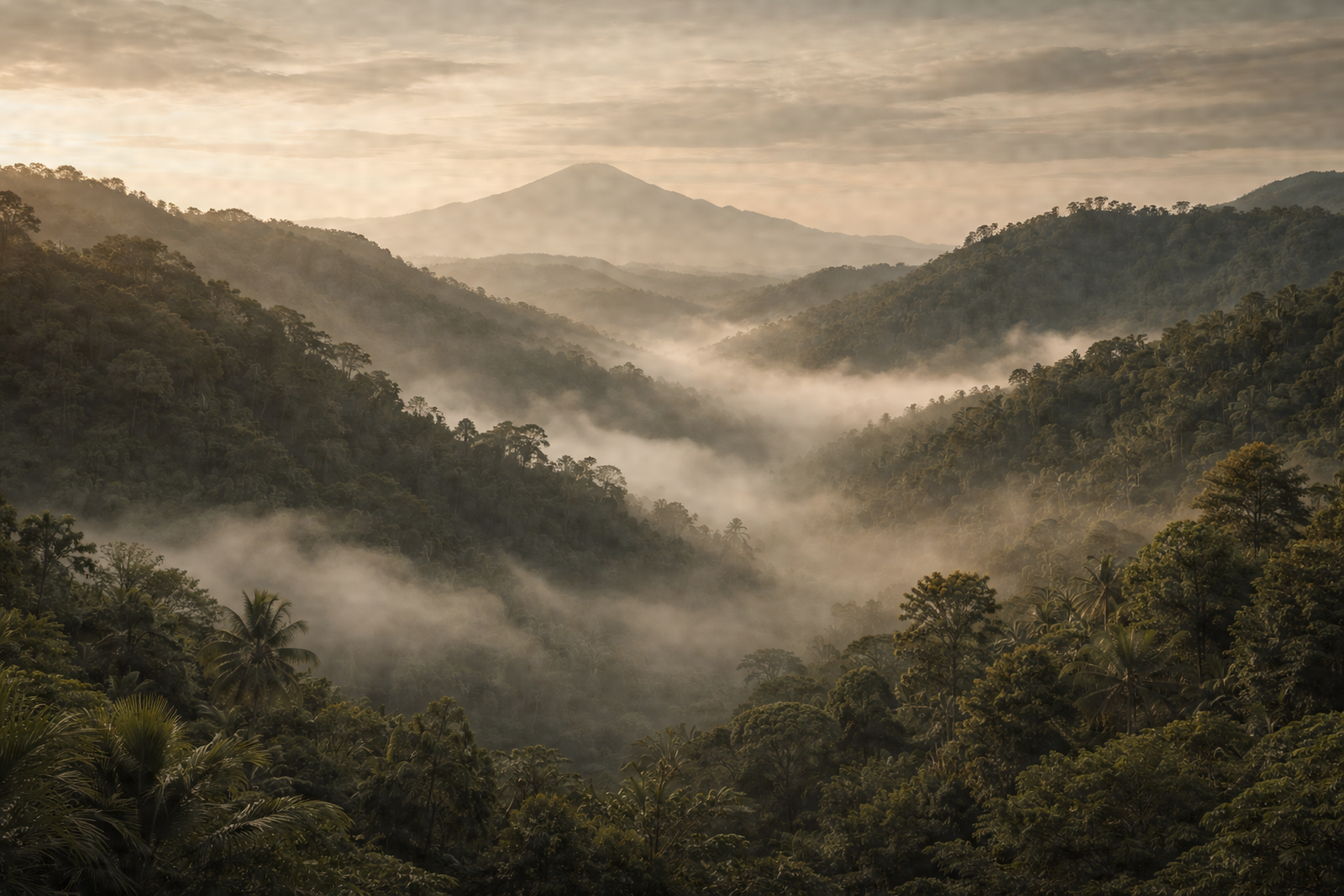

A mountain kept
for the inner world.
Munduk, North Bali ·
1,100 metres above the Bali Sea.
The mountain is not yet open. The world it holds already is.
There is a particular quality of silence at altitude. Not the silence of absence — the silence of presence. At 1,100 metres, in the volcanic highlands of North Bali, the air is cooler than you expect and the mist moves through the trees the way it has moved through them for a thousand years. You feel the place before you see it.
The retreat is in design. The land is held. The architecture is being drawn from the same philosophy that governs everything else in this world: that beauty does half the work, and that the right stone at the right angle of morning light can move a person more honestly than any programme or schedule.
When Munduk opens, it will be small. Fewer rooms than a property of this ambition would usually allow, and far fewer guests. That is deliberate. The point is depth, not throughput — a mountain observatory for the psyche, not a wellness resort, not a spiritual theme park. A place where the interior landscape of a human being is taken seriously.
Not a curated list of activities. An architecture of time.
What is offered here is not a schedule. It is closer to a shape given to the day — morning cacao while the valley is still under mist, the particular quality of dusk at elevation, long walks through jungle at a pace that lets you actually think, and the kinds of pauses and conversations that ordinary life rarely makes room for.
It will ask something of you. Most guests will not know exactly what until they have left.
This is the standard everything here is measured against: an experience that leaves an imprint on the soul.
At 1,100 metres, the air changes.
Munduk sits in the old volcanic highlands of North Bali — above the heat and the crowds, in a country of cloud forest, crater lakes, and waterfalls that most of the island never reaches. The temperature drops. The light softens. Sound carries differently here.
The land is steep and green and quiet. Paths move through the jungle rather than around it. Mornings arrive slowly, under mist; evenings come early and cool. Nothing about the place is in a hurry, and after a day or two, neither are you.
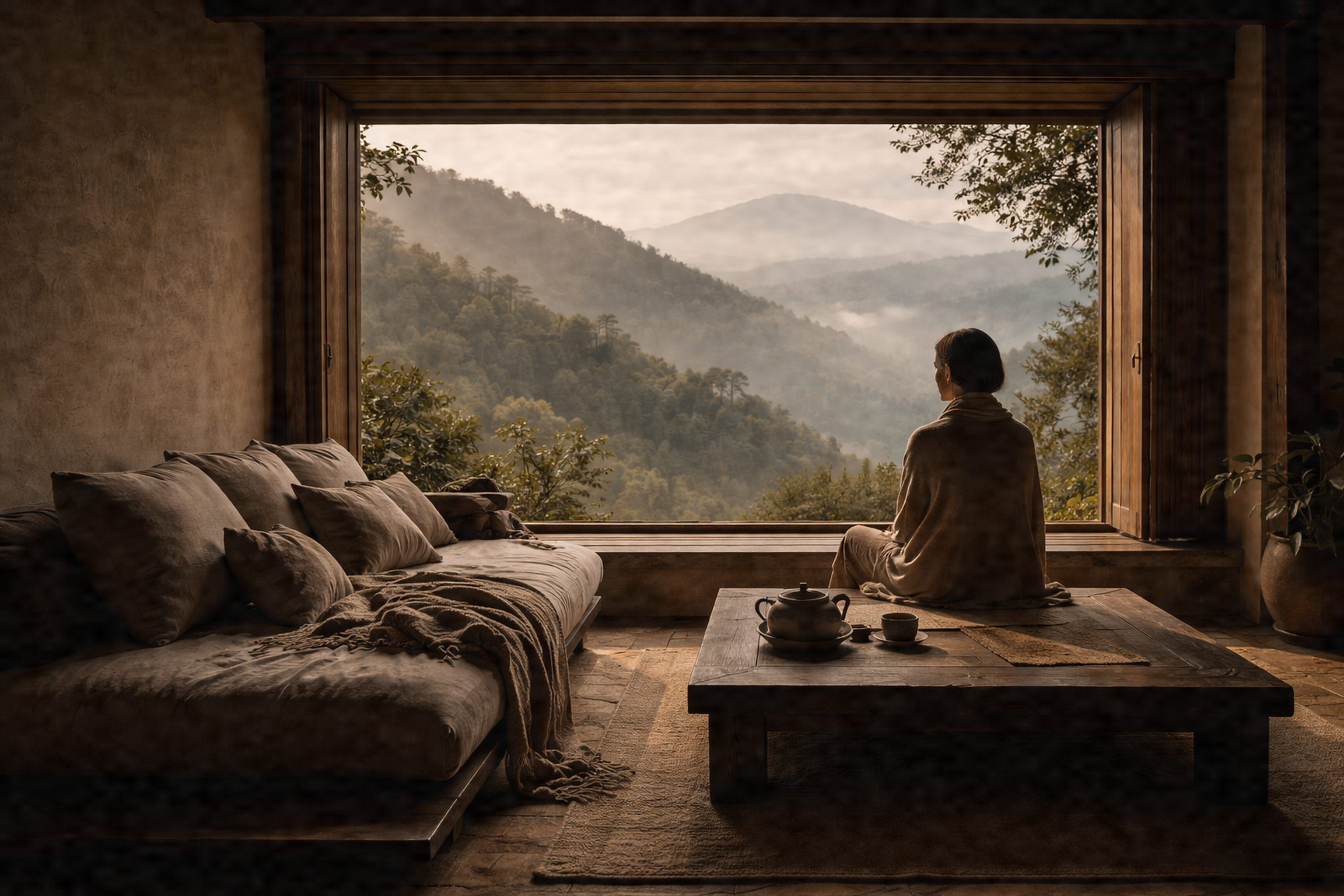
A building designed to lower your heart rate.
Before anything is asked of you, the architecture has already begun the work. The light is warm and low. Surfaces are matte and do not glare. Floors are dark hardwood underfoot, walls are hand-finished lime plaster, and every junction has been considered so that nothing jars. The building is quiet in the way a forest is quiet.
This is what we mean by designing for the nervous system: a place where the body settles before the mind is invited to. It draws on a particular lineage of contemporary mountain architecture — the restraint of Kerry Hill, the stillness of Aman, the way Geoffrey Bawa let a building disappear into its landscape — translated to this slope, this climate, this light.
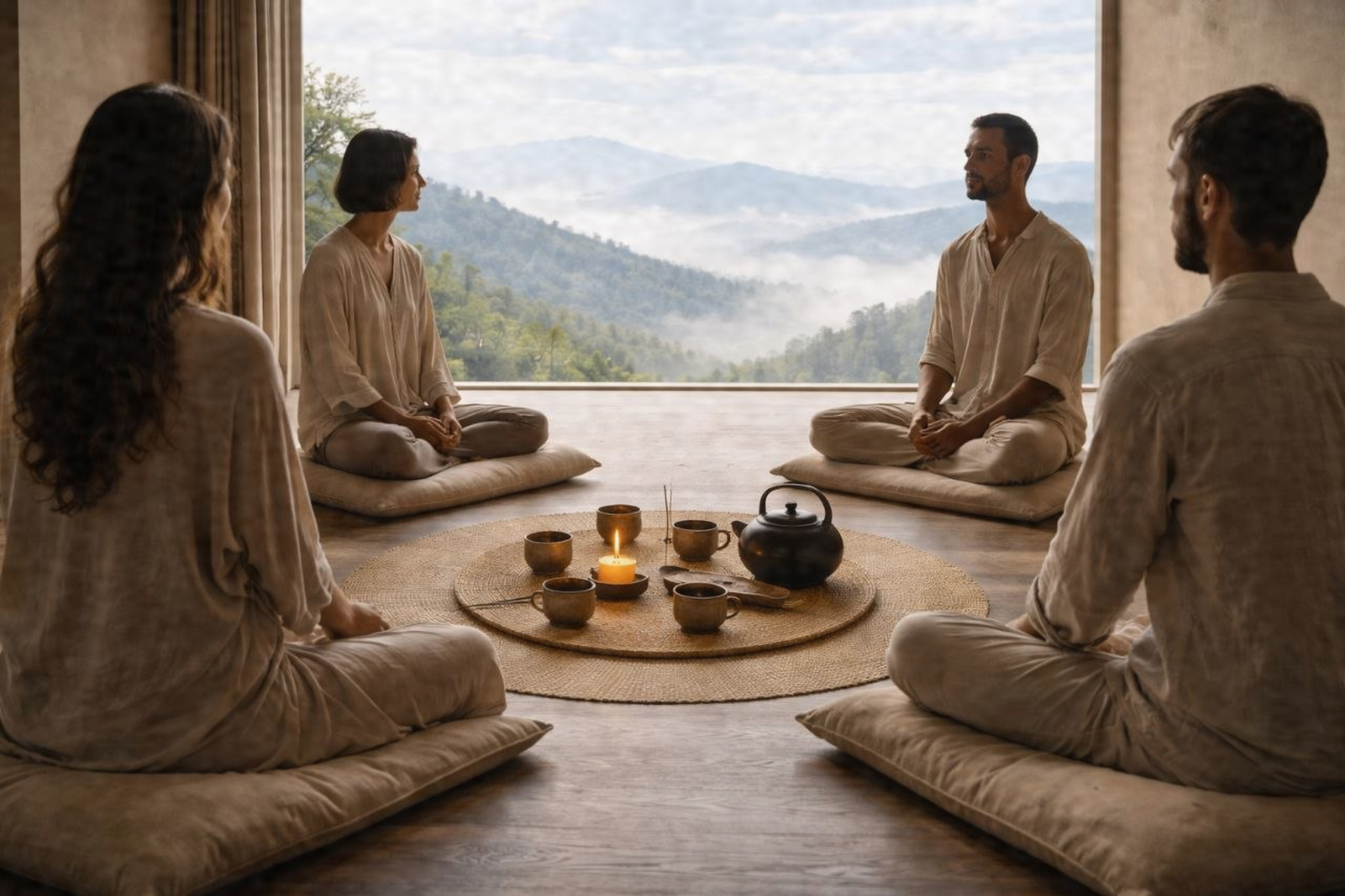
A day here has a shape, not a schedule.
It might begin with cacao in the living room while the valley is still under cloud. A morning walk. The long, slow middle of a day with nothing demanded of it. The particular quality of dusk at this elevation. A ceremony in the evening — or simply a corner of the room given to books, good chairs, and no WiFi.
There is no programme to keep up with. The space, the food, the cacao and the mountain are arranged so that the right things tend to happen on their own. What you do with the time is yours.
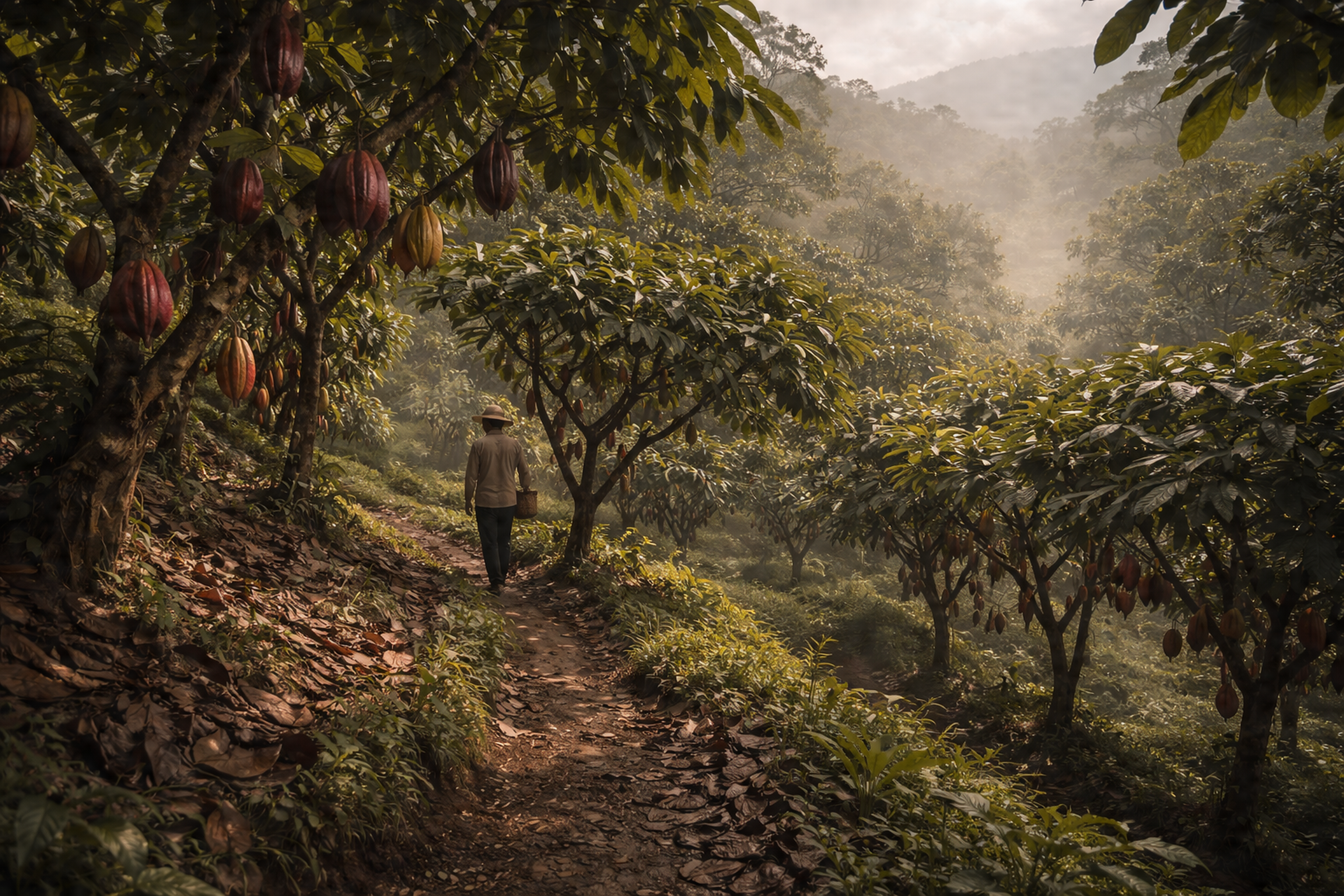
Cacao is not an amenity here. It is the spine of the day.
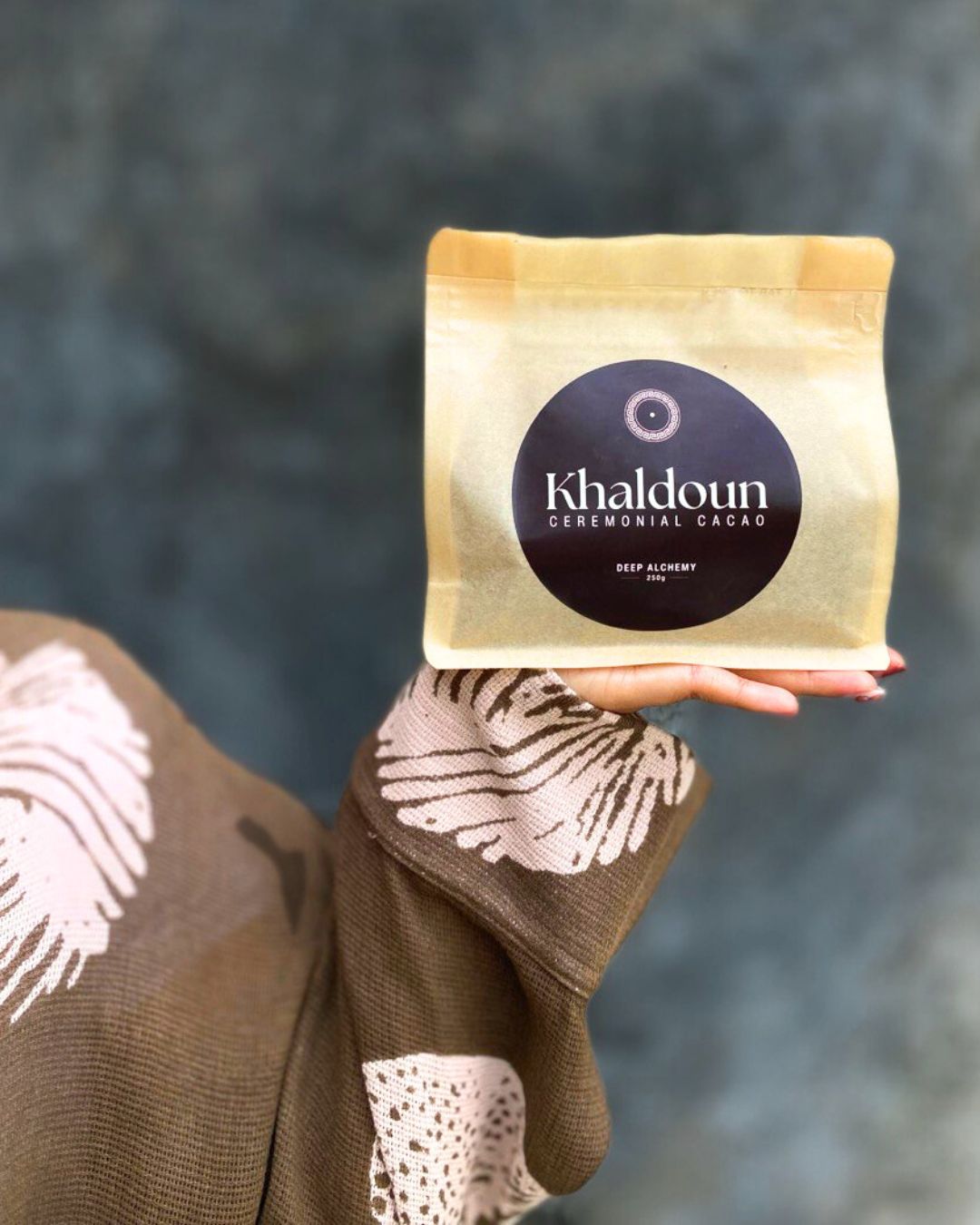
The cacao ritual is the central act of Munduk — the same single-origin, stone-ground ceremonial cacao that Khaldoun sources and makes, poured here at altitude, in the room it was always meant for. The morning cup. The evening ceremony. A way of moving from the head into the body before anything else is asked.
If you want to understand the cacao before you arrive, the whole of that world is already open.
Food as the quietest form of care.
Eating at Munduk happens in the living room — the same flexible heart of the place where the day gathers. The cooking is gentle and warming, built for altitude and for the body: broths, congee, steamed and slow-braised dishes, mostly drawn from what grows on the land and from a short list of dishes we simply love.
There is always the simplest option, too — a standing menu where you choose your proteins, your vegetables and your carbohydrates, and we build the bowl. Nourishment without negotiation.
Few rooms. One living heart. A whole mountain.
Munduk is deliberately small — a handful of very considered rooms rather than a resort. The intimacy is the point, and it is where the best of this world is heading anyway: fewer things, held to a higher standard.
At the centre is the living room — a single, flexible space that becomes, across a day, the place to gather, to eat, and to hold ceremony, with a cacao bar, a piano, and a reading corner with very good chairs. Around it, the guest rooms sit into the slope, each one private and quiet, framed to the valley and the mist. And beyond the buildings, the mountain itself — paths, forest, water, and the long views that do most of the work.
Two ways to come to the mountain.
Come as a guest
For the person who wants a quiet, cacao-centred retreat of their own — a few days on the mountain, at your own pace, inside the rhythm already described. No programme to join. Just the place, the food, the cacao, and the time.
Bring your own retreat
For facilitators and retreat leaders who hold space for others, the whole of Munduk can be taken for a single group. The mountain becomes yours for the duration — the living room as your ceremony space, the table set to your rhythm, the rooms held only for your people. We understand what it takes to hold a container, and the place is built to support it rather than get in the way.
Letters from the design and the build.
Munduk is being made slowly, and in the open. These are letters from the design and the build — the thinking behind the place, and what it has meant to listen to the land before drawing a single line. Letters arrive here as they are written.
On Listening to the Land
What it means to let a site tell you where the buildings go. Read the dispatch →Designing for the Nervous System
Why every surface, every light, every junction is chosen for calm. Read the dispatch →The Arrival, and the Problem of the Climb
How you come to a mountain matters as much as what you find there. Read the dispatch →One Room, Many Lives
Why the heart of Munduk is a single, flexible living space. Read the dispatch →The practical things, in one place.
Where it is. Munduk, in the volcanic highlands of North Bali, at 1,100 metres.
Getting here. Roughly two hours from Bali's only airport, an hour beyond Ubud, and two hours from the southern coast. Private transfers can be arranged.
Climate & what to pack. Cooler than the rest of Bali, especially at night — bring a warm layer. Mist and rain are part of the place.
Connectivity. WiFi is kept deliberately minimal. That is part of the design, not an oversight.
When it opens. The retreat is in progress. We are not putting a date on it yet — register your interest and we will write to you as the doors come close to opening.
Nearby. Waterfalls, crater lakes, and the quiet north of the island, for those who want to wander beyond the gates.
There is no urgency here.
If the mountain has found a chord in you, leave your email. We will write — not often, and not unless there is something worth saying — as Munduk comes closer to opening. And if you are building a retreat of your own, write to us directly.
Munduk is in progress. No opening date yet — one door into the world, open at your pace.